


What Are the Differences Between Electronic and Hydraulic Universal Testing Machines? | ASTM E8&ISO 6892 Testing Standards
2026-05-20 16:43:05 Jinan Kason Testing Equipment Co., Ltd.Date: May 20, 2026
Core Keywords: Electronic Universal Testing Machine, Hydraulic Universal Testing Machine, Universal Testing Equipment, Tensile Testing Machine, ASTM E8, ISO 6892, Material Testing Standards
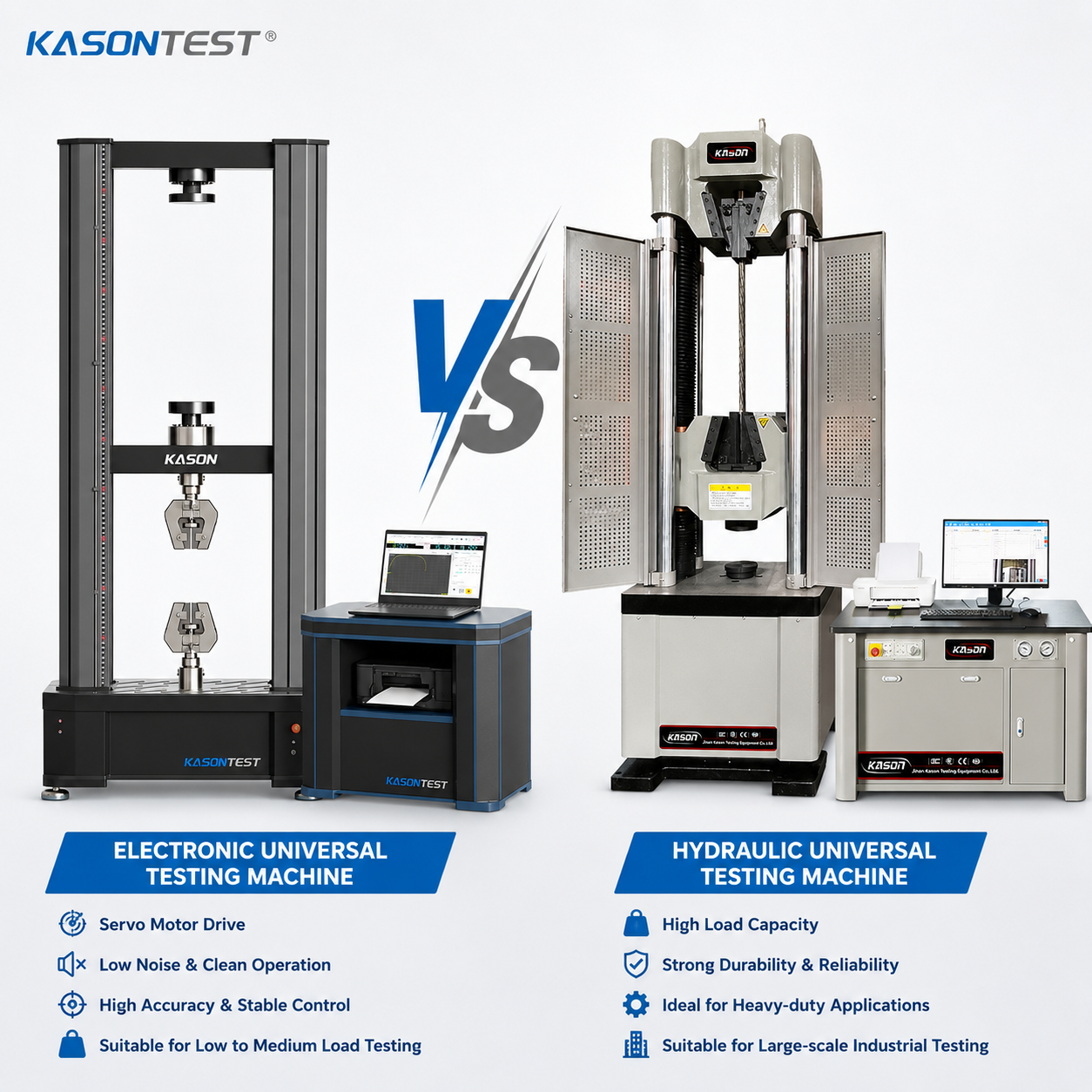
Electronic and hydraulic universal testing machines are widely used in quality control laboratories, research institutes, and industrial manufacturing for evaluating the mechanical properties of materials. But what are the main differences between these two testing systems?
Electronic universal testing machines use servo motors and precision ball screw mechanisms to perform tensile, compression, bending, and peeling tests with high accuracy and stable speed control. They are commonly applied to plastics, rubber, textiles, packaging, and light metal materials.
Hydraulic universal testing machines rely on hydraulic oil pressure and cylinder-driven systems to generate large testing forces. These machines are suitable for heavy-duty applications such as steel bars, metal plates, construction materials, and structural components requiring high load capacities.
Compared with hydraulic systems, electronic testing machines provide cleaner operation, lower noise levels, easier maintenance, and higher precision for small and medium load testing. Hydraulic machines offer superior force capacity and long-term durability for large industrial testing projects.
Common international testing standards include:
- ASTM E8 / ISO 6892 — Metallic Tensile Testing
- ASTM A370 — Steel Mechanical Testing
- ASTM D638 — Plastic Tensile Testing
- ISO 7500-1 — Verification of Testing Machines
Choosing the correct universal testing machine depends on testing force requirements, material types, accuracy demands, and international compliance standards used by the industry.

-
Telephone:+86 15910081986
Address:NO.4715, JINGSHI WEST ROAD, HUAIYIN DISTRICT, JINAN, SHANDONG, CHINA
Mailbox:admin@jnkason.com
-
Testing machine equipment metallographic analysis hardness tester series
Non-destructive testing equipment Material analysis instruments
©2026 Jinan Kason Testing Equipment Co., Ltd.