


KASON-ST903 Fullly Automatic Sealing Machine
- Vacuum Range
0 ~ -90 kPa
- Vacuum Accuracy
0.5 grade
- Vacuum Resolution
0.1 kPa
- Vacuum Retention Time
0 ~ 9999 s (Extendable)
The KASON-ST903 series fully automatic seal tester is designed for conducting seal integrity tests on various packaging forms—including bags, bottles, tubes, cans, and boxes—across industries such as food, pharmaceuticals, medical devices, daily chemicals, automotive, electronic components, and stationery.
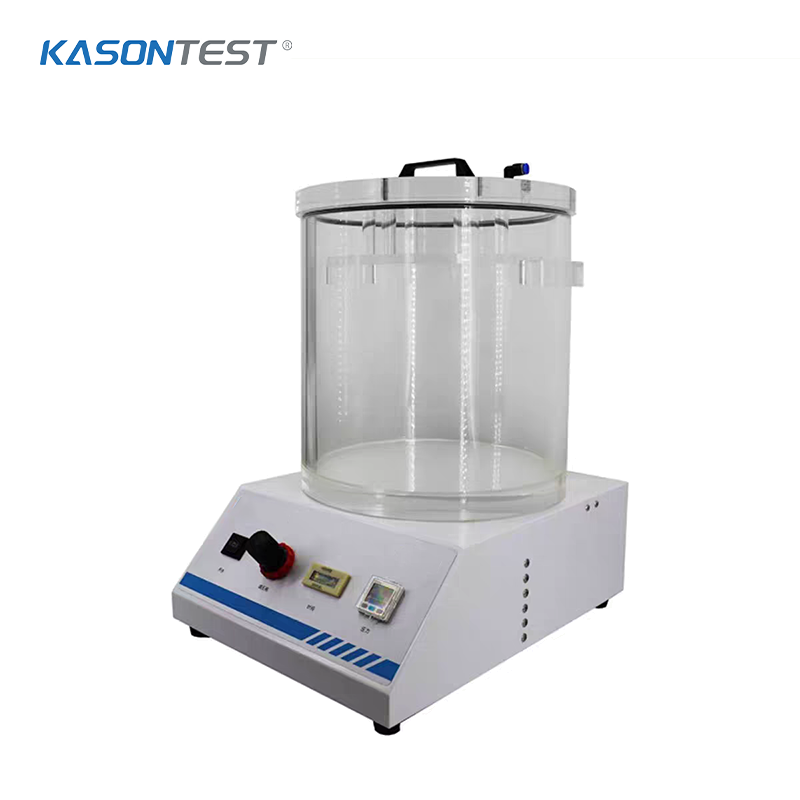
KASON-ST903 Fullly Automatic Sealing Machine
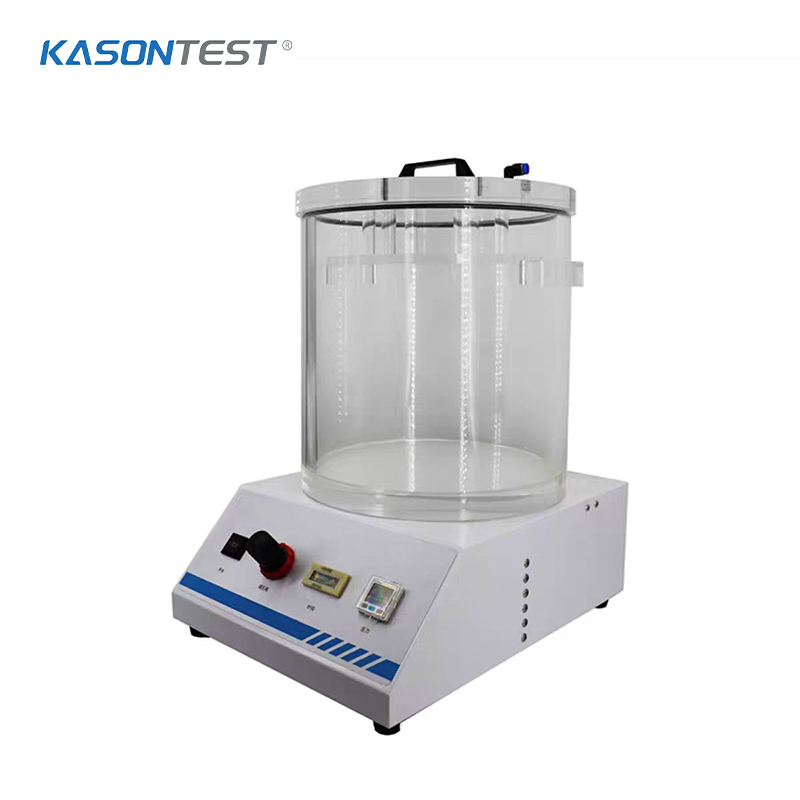
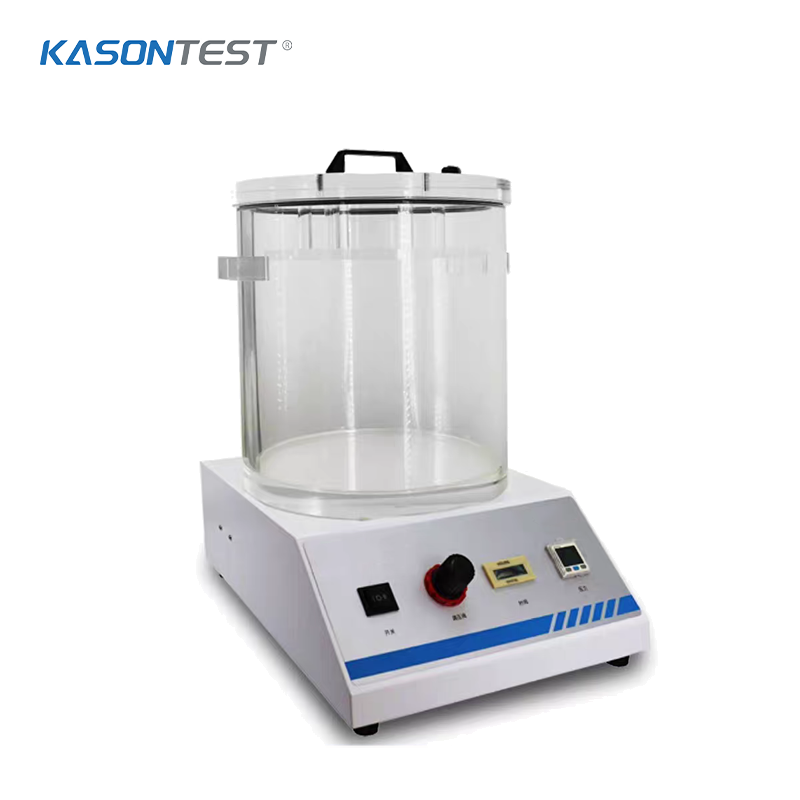
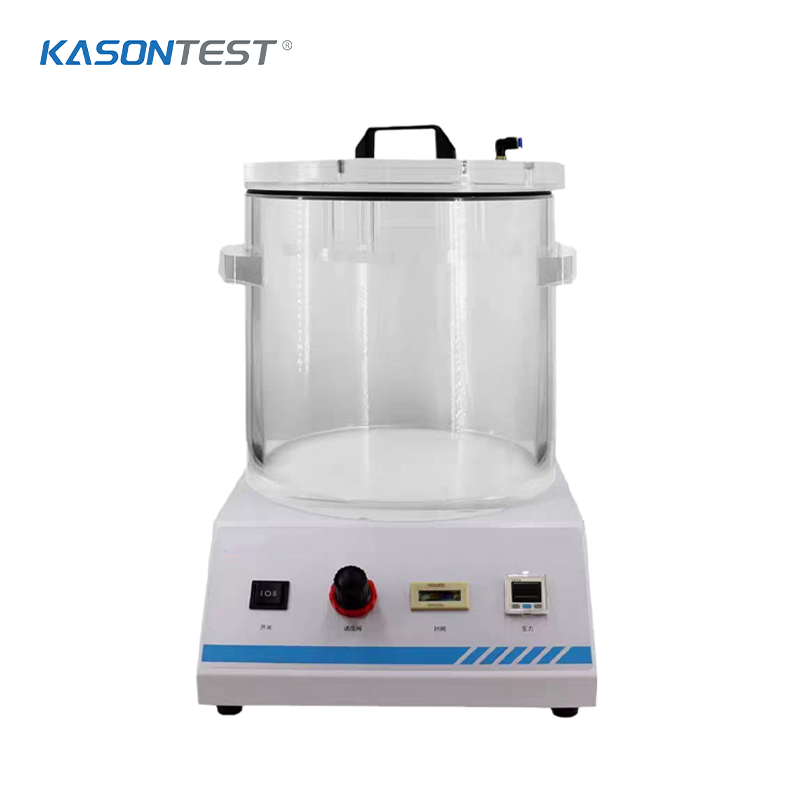
KASON-ST903 Fullly Automatic Sealing Machine
The KASON-ST903 series fully automatic seal tester is designed for conducting seal integrity tests on various packaging forms—including bags, bottles, tubes, cans, and boxes—across industries such as food, pharmaceuticals, medical devices, daily chemicals, automotive, electronic components, and stationery.
Request a QuoteProduct Details
The KASON-ST903 series fully automatic seal tester is designed for conducting seal integrity tests on various packaging forms—including bags, bottles, tubes, cans, and boxes—across industries such as food, pharmaceuticals, medical devices, daily chemicals, automotive, electronic components, and stationery. It is also capable of assessing the sealing performance of test specimens that have previously undergone drop or pressure resistance testing.
Applicable Industries:
1] Food Industry: Flexible Packaging: Powdered milk pouches, cheese, coffee sticks/packets, mooncakes, seasoning packets, snack foods, tea bags, bagged rice, potato chips, pastries, puffed snacks, Tetra Pak cartons, sunflower seeds... essentially any food packaging bag, regardless of shape, material, or size. Semi-Rigid Packaging: Fresh meat, fruit and vegetable salads, trays, soft cans, yogurt, ketchup, canister-packed chips (snacks), jellies... any semi-rigid packaging, regardless of shape, material, or size. Rigid Packaging: Canned powdered milk, beverage bottles, oil jugs, canned goods, biscuit tins, coffee jars, pull-tab cans, seasoning bottles... any rigid packaging, regardless of shape, material, or size.
2] Pharmaceutical Industry: Sealed Containers: Vials, ampoules, syringes, oral liquid bottles, eye drop bottles, sterile pouches, IV bags/bottles, liquid injectables, powder injectables, BFS bottles, API bottles, BPC bottles, FFS bottles, etc.—any sealed container, regardless of shape, material, or size. Blister Packaging: Samples packaged in blister packs, such as powders, tablets, capsules, contact lenses, etc. Low-Headspace Packaging: Packaging for effervescent granules, small-dose medicinal powders, and other items featuring extremely minimal headspace.
3] Others: Tyvek® packaging, various types of aluminum foil bags, wet wipes, cosmetic packaging, and more. Instrument Features:
1] Microcomputer control; test parameters are fully configurable, and the entire testing process is completely automated.
2] Digital display simultaneously shows set pressure, set pressure-holding time, and real-time pressure readings.
3] PVC control panel with metal buttons ensures simple and convenient operation.
4] The sealing chamber is constructed from high-quality imported acrylic tubing, featuring a robust wall thickness of 15mm.
5] Both the pressure-holding time and test pressure can be preset in advance, enabling "one-touch" operation for the entire testing process.
6] Pneumatic components utilize internationally renowned brands, ensuring superior sealing performance and enhanced reliability.
7] During the test, the instrument automatically maintains a constant pressure by replenishing air according to the preset value, requiring no manual intervention.
8] Upon completion of the test, the instrument automatically performs a back-flush to release the pressure, saving valuable operational time.
9] The instrument features built-in filtration systems for both compressed air (compressed air source provided by the user) and vacuum air; these filtration units are externally mounted to facilitate easy drainage and removal of impurities.
10] To ensure stable, interference-free operation, the instrument employs a dual-power supply system: the main controller and the pressure control module are powered independently.
Testing Principle:
1] By evacuating the vacuum chamber, a pressure differential is created between the interior and exterior of the specimen (which is immersed in water); the instrument then monitors for any gas escaping from within the specimen to determine its sealing integrity. 2] By evacuating the vacuum chamber to create a pressure differential, the instrument observes the specimen's expansion under vacuum and its subsequent recovery of shape after the vacuum is released, thereby assessing its sealing performance.
Product parameters
Technical Parameters:
|
Parameter |
KASON-ST903 Fully Automatic Seal Tester |
|
Vacuum Range |
0 ~ -90 kPa |
|
Vacuum Accuracy |
Class 0.5 |
|
Vacuum Resolution |
0.1 kPa |
|
Vacuum Retention Time |
0 ~ 9999 s (Extendable) |
|
Control Mode |
Microcomputer-controlled, fully automatic testing |
|
Display Mode |
Digital pressure display, digital time display |
|
Air Source Pressure |
0.5 MPa ~ 0.7 MPa (Air source provided by user; optional accessory available) |
|
Air Source Interface |
Φ6 Polyurethane tubing |
|
Effective Dimensions of Sealing Chamber |
Φ270 × 210 mm (H) (Standard configuration) |
|
Φ360 × 585 mm (H), Φ460 × 330 mm (H) (Optional) |
|
|
Note: Other dimensions available upon request (customizable) |
|
|
Overall Dimensions |
Main Unit: 420 (L) × 320 (W) × 120 (H) mm |
|
|
Sealing Chamber: Φ300 × 350 mm (H) (Standard configuration) |
|
Power Supply |
220 VAC 50 Hz / 120 VAC 60 Hz |
|
Net Weight |
Approx. 16 kg |
|
Reference Standard |
GB/T 15171 "Test Methods for Seal Performance of Flexible Packages" |
|
ASTM D3078 "Standard Test Method for Determination of Leaks in Flexible Packaging by Bubble Emission" |
Download
| Name | Download |
|---|---|
| KASON-ST903 Fullly Automatic Sealing Machine.pdf |
Applicable industries

Related Products

-
Telephone:+86 15910081986
Address:NO.4715, JINGSHI WEST ROAD, HUAIYIN DISTRICT, JINAN, SHANDONG, CHINA
Mailbox:admin@jnkason.com
-
Testing machine equipment metallographic analysis hardness tester series
Non-destructive testing equipment Material analysis instruments
©2026 Jinan Kason Testing Equipment Co., Ltd.