


ASTM F606 Testing of Externally and Internally Threaded Fasteners, Washers, Direct Tension Indicators, and Rivets
ASTM F606 outlines standardized testing procedures for determining the mechanical properties of externally and internally threaded fasteners, washers, direct tension indicators, and rivets. This type of testing is critical for ensuring product reliability and performance, especially in industries like automotive, industrial manufacturing, and consumer goods.
- Home >> Service industry >> By Standards >> ASTM
ASTM F606 Testing of Externally and Internally Threaded Fasteners, Washers, Direct Tension Indicators, and Rivets
ASTM F606 Testing of Externally and Internally Threaded Fasteners, Washers, Direct Tension Indicators, and Rivets
ASTM F606 outlines standardized testing procedures for determining the mechanical properties of externally and internally threaded fasteners, washers, direct tension indicators, and rivets. This type of testing is critical for ensuring product reliability and performance, especially in industries like automotive, industrial manufacturing, and consumer goods.
Request a QuoteProduct Details
ASTM F606 Testing of Externally and Internally Threaded Fasteners, Washers, Direct Tension Indicators, and Rivets
ASTM F606 outlines standardized testing procedures for determining the mechanical properties of externally and internally threaded fasteners, washers, direct tension indicators, and rivets. This type of testing is critical for ensuring product reliability and performance, especially in industries like automotive, industrial manufacturing, and consumer goods.
TESTING CONSIDERATIONS
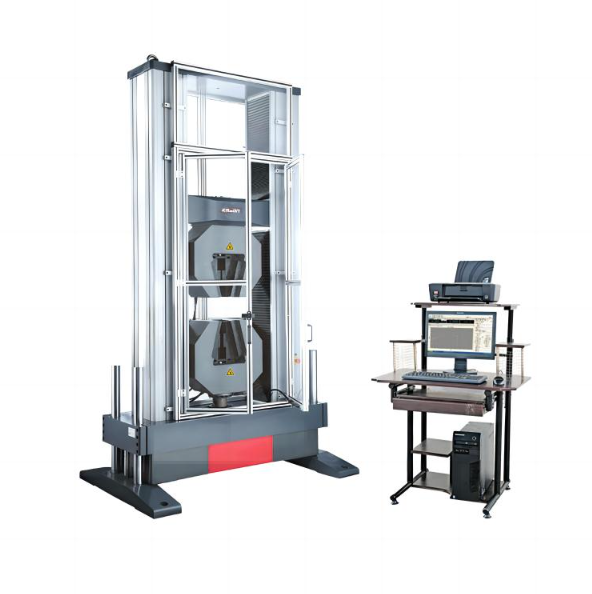
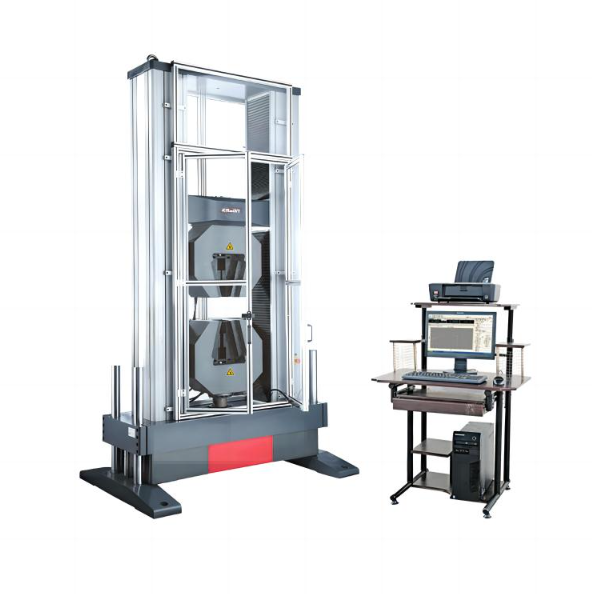
Testing per ASTM F606 generally requires applying substantial forces to metal components, making it best suited for robust, high-capacity floor model systems. We recommend using a system like the universal testing system, paired with Bluehill Universal software, for optimal performance and precision.
For Series C and D bolts rated for loads exceeding 600 kN, a hydraulic testing system - is recommended to ensure accurate and safe testing under high-load conditions.
GRIPS AND FIXTURES FOR FASTENER TESTING
For tensile testing of fasteners, we offers a comprehensive range of holders and inserts designed to accommodate standard fastener dimensions. These specialized accessories support a variety of test types - including proof tests, axial and wedge tensile tests, and cone stripping tests - on bolts, screws, studs, and nuts.
These accessories are compatible with most universal testing machines and include a full selection of flat, wedge, and countersunk test washers, fastener holders, short bolt adapters, holder reducing assemblies, and nut proof loading mandrels. These components enable accurate and repeatable performance for proof, tensile, and head strength testing in accordance with ASTM F606 and other relevant fastener testing standards.
TESTING TIPS AND BEST PRACTICES
In accordance with ASTM F606, elongation must be recorded during fastener proof testing to verify that the fastener has not undergone permanent deformation once the load is removed. While extensometers may be used to measure elongation - depending on the test method, they are not typically used for most testing. As a result, machine stiffness becomes a critical factor in ensuring accurate results.
Our test frames and bolt fixtures are engineered with high stiffness, enabling more consistent and reliable elongation measurements - even without the use of an extensometer.
Additionally, each fastener holder is designed with a key slot for quick and precise specimen alignment. A recessed circular seat at the base of the holder ensures a snug fit for the washer, minimizing slippage and reducing setup time. This design guarantees a secure, centered seating for every test, enhancing both efficiency and repeatability.
To ensure your testing complies with the standard, we always recommend reviewing the full ASTM F606 documentation before initiating any new testing procedures.
Product parameters
Download
| Name | Download |
|---|
Applicable industries
Related Products

-
Telephone:+86 15910081986
Address:NO.4715, JINGSHI WEST ROAD, HUAIYIN DISTRICT, JINAN, SHANDONG, CHINA
Mailbox:admin@jnkason.com
-
Testing machine equipment metallographic analysis hardness tester series
Non-destructive testing equipment Material analysis instruments
©2026 Jinan Kason Testing Equipment Co., Ltd.