


BEND AND FLEXURAL TESTING
For this reason, bend testing is commonly used to evaluate the reaction of materials to realistic loading situations.Flexural test data can be particularly useful when a material is to be used as a support structure. For example, a plastic chair needs to give support in many directions
- Home >> Service industry >> By Standards >> Others
BEND AND FLEXURAL TESTING
BEND AND FLEXURAL TESTING
For this reason, bend testing is commonly used to evaluate the reaction of materials to realistic loading situations.Flexural test data can be particularly useful when a material is to be used as a support structure. For example, a plastic chair needs to give support in many directions
Request a QuoteProduct Details
An Introduction
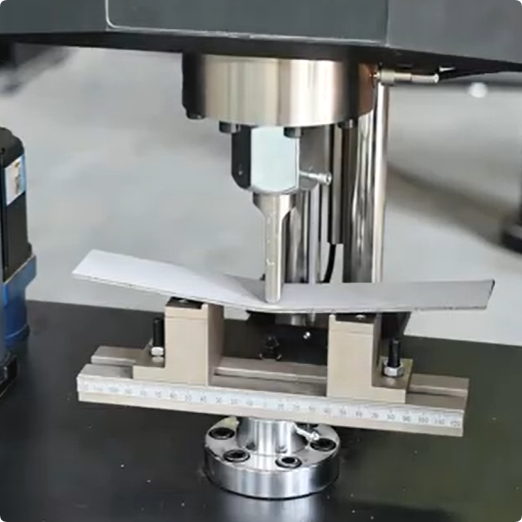
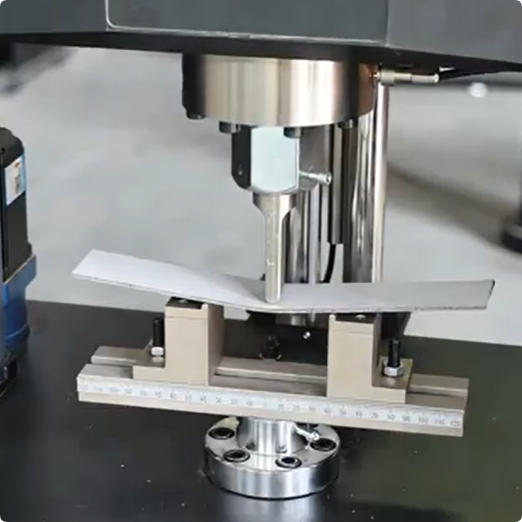
Bend testing, sometimes called flexure testing or transverse beam testing, measures the behavior of materials subjected to simple beam loading. It is commonly performed on relatively flexible materials such as polymers, wood, and composites. At its most basic level, a bend test is performed on a universal testing machine by placing a specimen on two support anvils and bending it through applied force on one or two loading anvils in order to measure its properties.
Why Perform a Bend/Flex Test?
Engineers often want to understand various aspects of a material’s behavior, but a simple uniaxial tensile or compression test may not provide all necessary information. As the specimen bends or flexes, it is subjected to a complex combination of forces including tension, compression, and shear. For this reason, bend testing is commonly used to evaluate the reaction of materials to realistic loading situations.
Flexural test data can be particularly useful when a material is to be used as a support structure. For example, a plastic chair needs to give support in many directions. While the legs are in compression when in use, the seat will need to withstand flexural forces applied from the person seated. Not only do manufacturers want to provide a product that can hold expected loads, but the material also needs to return to its original shape if any bending occurs.
3-Point Bend Test
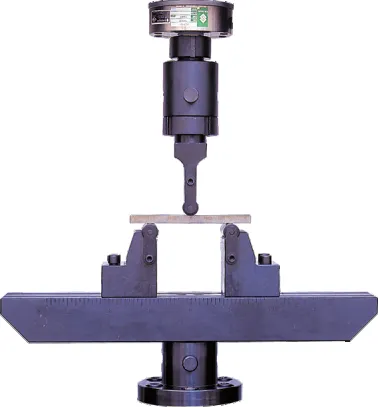
A 3-point flex test balances a specimen between two lower anvils while applying force from a single upper anvil centered at the midpoint. The area of uniform stress is quite small and concentrated under the center loading point. Different testing standards may require the anvils to be fixed, rotated, or rocking.
4-Point Bend Test
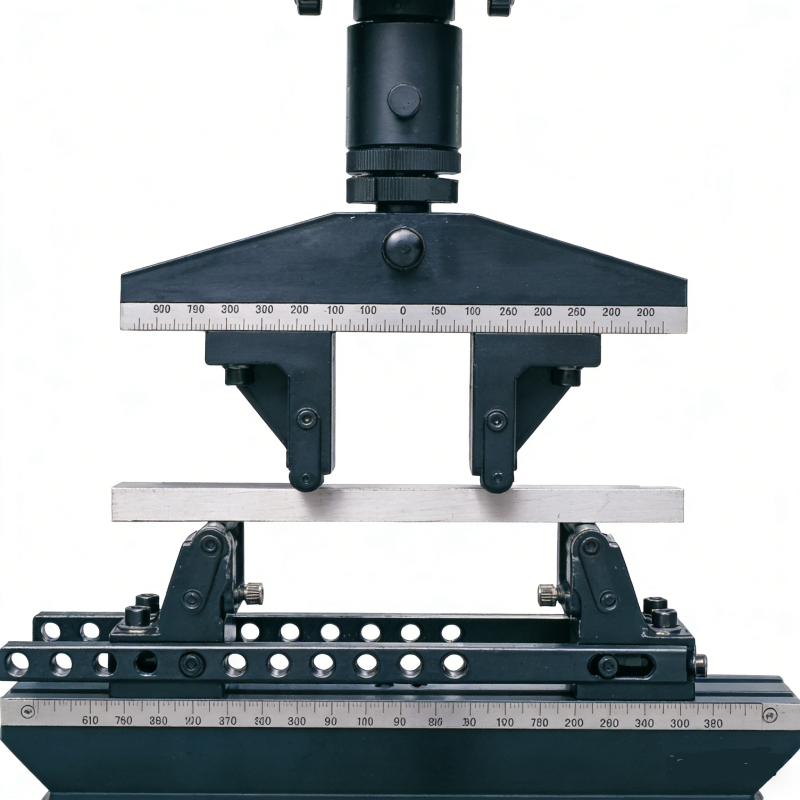
A 4-point flex test differs from the 3-point test in that it has two upper anvils positioned equidistant from the center of the specimen. In this test, the area of uniform stress exists between the inner span loading points (typically half the length of the outer span). Again, depending on the requirements of the testing standard, the anvils may need to be fixed, rotated, or rocking. Typically, 4-point tests are used to measure modulus of elasticity in bending for brittle materials.
Product parameters
Download
| Name | Download |
|---|
Applicable industries
Related Products

-
Telephone:+86 15910081986
Address:NO.4715, JINGSHI WEST ROAD, HUAIYIN DISTRICT, JINAN, SHANDONG, CHINA
Mailbox:admin@jnkason.com
-
Testing machine equipment metallographic analysis hardness tester series
Non-destructive testing equipment Material analysis instruments
©2026 Jinan Kason Testing Equipment Co., Ltd.