


KASON-IWM48A Whiteness colorimeter
- Measuring range
0~199
- Light source
D65
- Diffuse sphere diameter
150mm
- Measuring aperture diameter
25mm
This instrument is widely used in industries such as papermaking, printing, textile dyeing, ceramics and enamel, building materials, chemicals, grain, and salt production to determine the whiteness, yellowness, color, and color difference of objects.
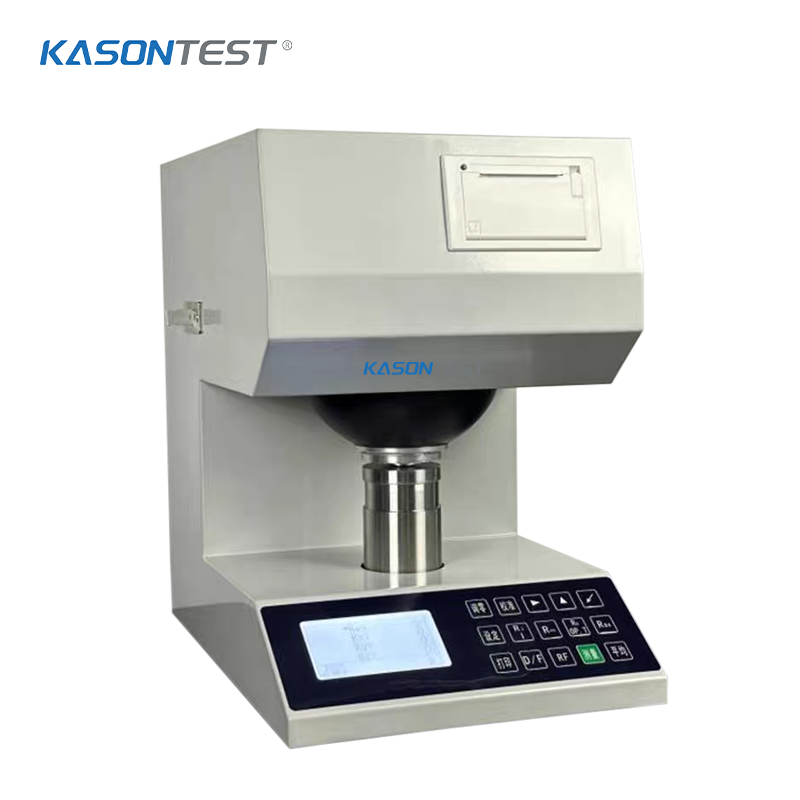
KASON-IWM48A Whiteness colorimeter
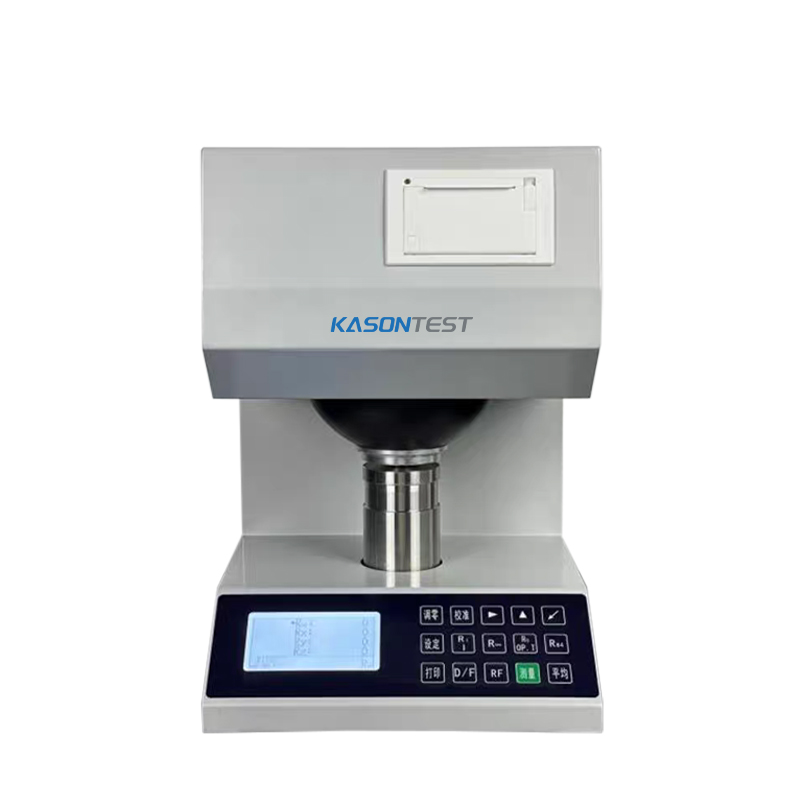
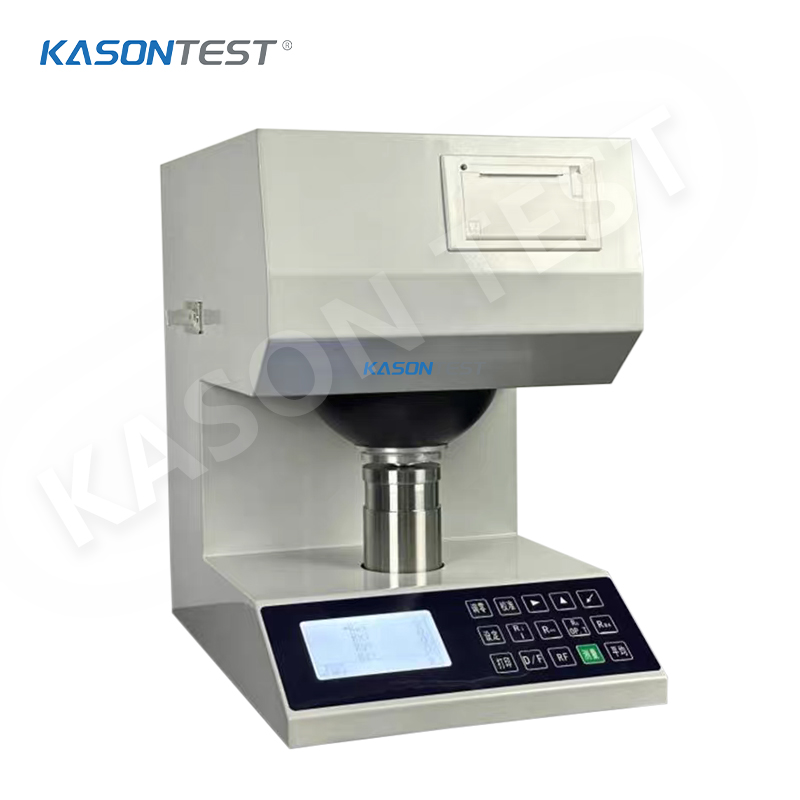
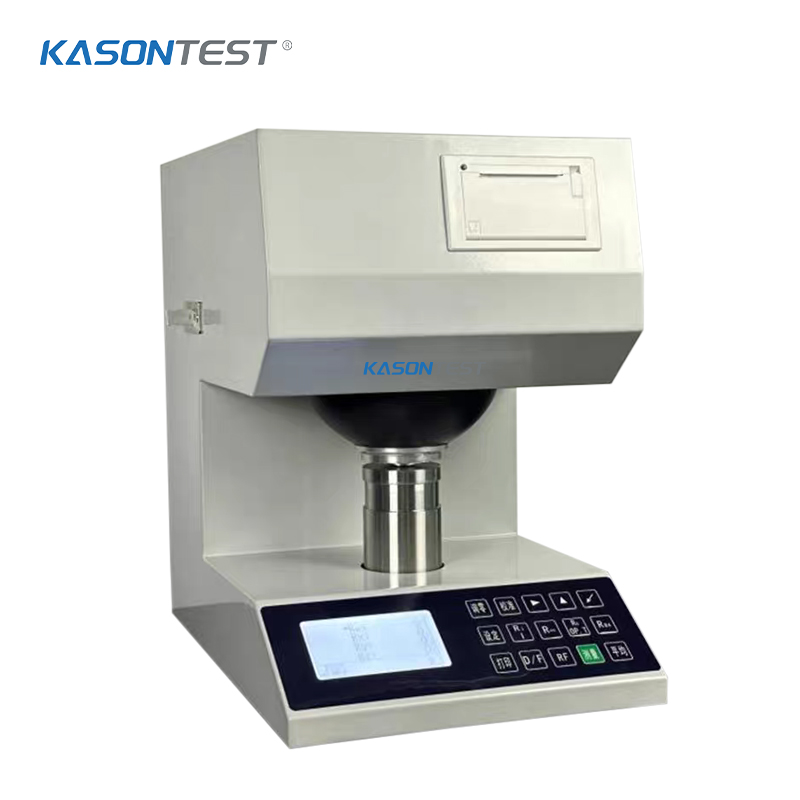
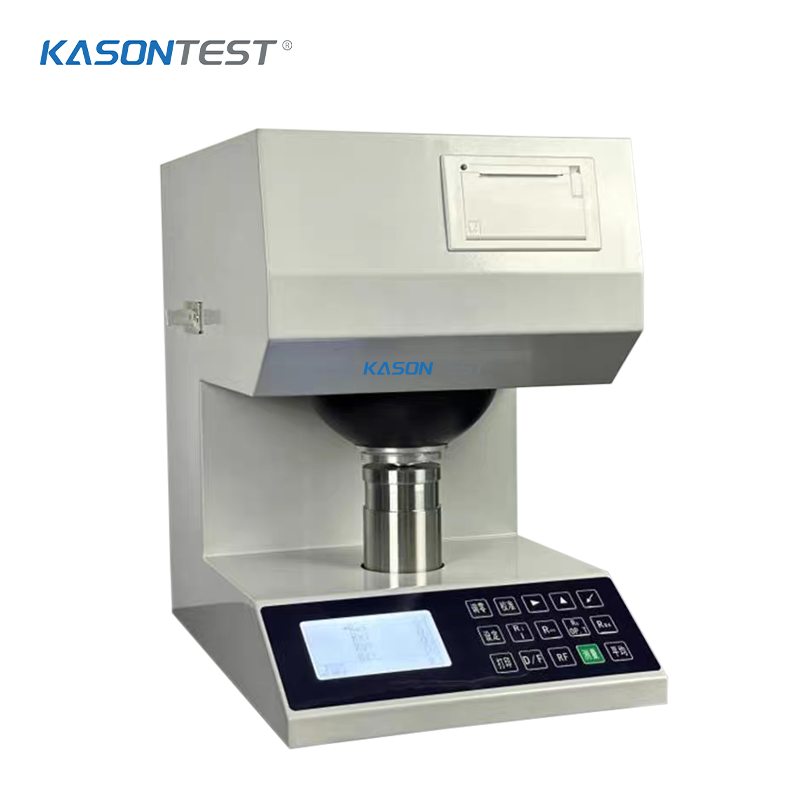
KASON-IWM48A Whiteness colorimeter
This instrument is widely used in industries such as papermaking, printing, textile dyeing, ceramics and enamel, building materials, chemicals, grain, and salt production to determine the whiteness, yellowness, color, and color difference of objects.
Request a QuoteProduct Details
Application Range
This instrument is widely used in industries such as papermaking, printing, textile dyeing, ceramics and enamel, building materials, chemicals, grain, and salt production to determine the whiteness, yellowness, color, and color difference of objects. It can also measure the opacity, transparency, light scattering coefficient, light absorption coefficient, and ink absorption value of paper. This instrument can measure CIE (1982) whiteness (Ganz visual whiteness) W10 and color cast value Tw10. It can measure ISO whiteness (R457 blue light whiteness) and Z whiteness (Rz). For fluorescently whitened samples, it can also measure the fluorescent whitening effect produced by the emission of fluorescent substances. It can measure the whiteness WJ of building materials and non-metallic mineral products. It can also measure Hunter whiteness WH.
Features:
1. Determines object color and reports diffuse reflectance factors Rx, Ry, Rz; stimulus values X10, Y10, Z10; chromaticity coordinates x10, y10; lightness L*; chromaticity a*, b*; chroma C*ab; hue angle h*ab; dominant wavelength λd; excitation purity Pe; color difference ΔE*ab; lightness difference ΔL*; chroma difference ΔC*ab; hue difference ΔH*ab; and Hunter system values L, a, b.
2. The instrument now includes a function to measure lead core concentration.
3. This instrument features a printer with an imported thermal printer core, eliminating the need for ink and ribbon, operating silently, and printing at high speed.
4. This instrument is equipped with a standard RS232 interface for communication with computer software.
5. Determines yellowness YI, opacity OP, light scattering coefficient S, light absorption coefficient A, transparency, and ink absorption value.
6. The reference sample can be a physical object or data. The instrument can store information for up to ten reference samples.
7. The instrument has a memory function. Even after prolonged power outages, useful information such as zeroing, calibration, and the values of standard and reference samples will not be lost.
8. Measures reflected optical density Dy and Dz (lead core concentration).
9. Simulates D65 illuminator illumination. Employs the CIE 1964 supplementary colorimetric system and the CIE 1976 (L*a*b*) color space color difference formula.
Employs d/o illumination observation geometry. The diffuser sphere diameter is 150mm, the measuring aperture diameter is 25mm, and a light absorber is included to eliminate the influence of specular reflection from the sample.Product parameters
|
Model |
KASON-IWM48A |
|
Measurement range
|
0~199 |
|
Light source |
D65 |
|
Diffuse sphere diameter
|
150mm |
|
Measuring aperture diameter |
25mm |
|
Measurement repeatability |
σ(Y10)<0.1,σ(X10、Y10)<0.001 |
|
Accuracy |
△Y10<1.0,△x10(△y10)<0.01 |
|
Sample size |
The test plane should be no smaller than Φ30mm and the thickness should not exceed 40mm. |
|
Power supply |
AC220V,50Hz,0.3A |
|
Test conditions |
Temperature 10~30℃, relative humidity not exceeding 85% |
|
Main unit dimensions |
364×264×400mm |
|
Net weight |
Approx. 18kgs |
Download
| Name | Download |
|---|---|
| KASON-IWM48A Whiteness colorimeter.pdf |
Applicable industries
Related Products

-
Telephone:+86 15910081986
Address:NO.4715, JINGSHI WEST ROAD, HUAIYIN DISTRICT, JINAN, SHANDONG, CHINA
Mailbox:admin@jnkason.com
-
Testing machine equipment metallographic analysis hardness tester series
Non-destructive testing equipment Material analysis instruments
©2026 Jinan Kason Testing Equipment Co., Ltd.