Standard Canadian Freeness Tester – Detailed Introduction
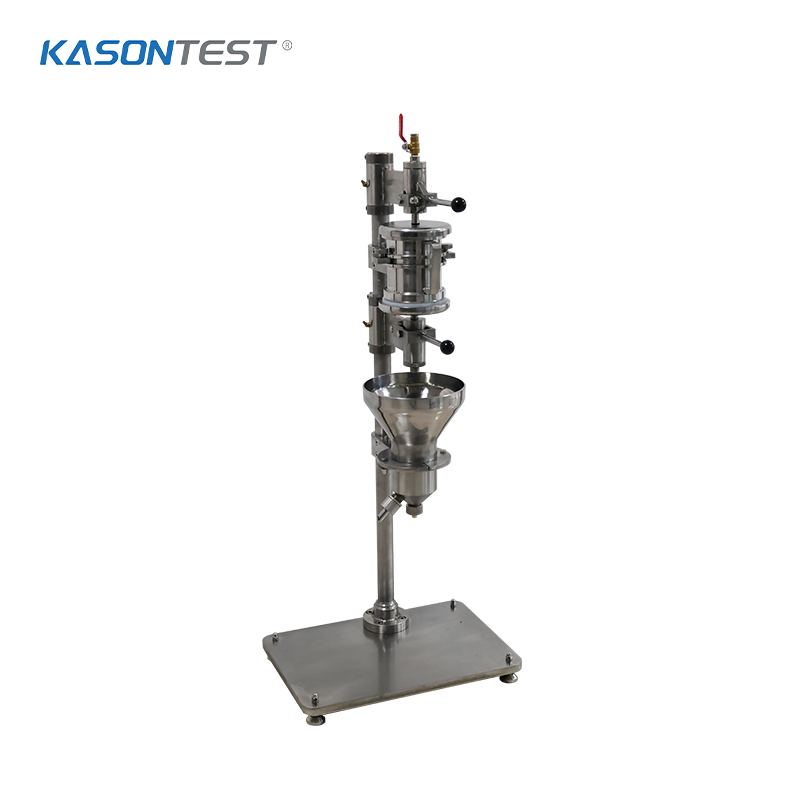
The standard Canadian Freeness Tester is an essential instrument for measuring pulp freeness. Pulp freeness refers to the degree of fiber dispersion in water, which directly affects the quality and performance of paper. Therefore, testing pulp freeness is critical to paper production.
Canadian Standard Freeness (CSF) refers to the drainage performance of a 1000 mL pulp suspension with a concentration of (0.3 ± 0.0005)% at a temperature of 20°C, measured under specified conditions using a Canadian Freeness Tester. The CSF value is expressed as the volume of water (mL) flowing out from the side tube of the instrument.
The Canadian Standard Freeness Tester is used to determine the drainage rate of various pulp water suspensions, expressed in terms of Canadian Standard Freeness (CSF). The drainage rate reflects the beating and refining condition of fibers. It is suitable for production control testing of ground wood pulp and widely applied to monitor drainage changes of various chemical pulps during beating and refining processes. It also indicates fiber surface condition and swelling performance.
This tester is extensively used for beating process inspection, papermaking process formulation, and pulp and paper laboratory research in scientific research institutions and universities. It is an indispensable measuring instrument for pulp and paper research.
Implemented Standard: TAPPI T227
Compliant Standards: ISO 5267/2, AS/NZ 1301 206s, BS 6035 Part 2, CPPA C1, SCAN C21, QB/T1669-1992
Instrument Structure
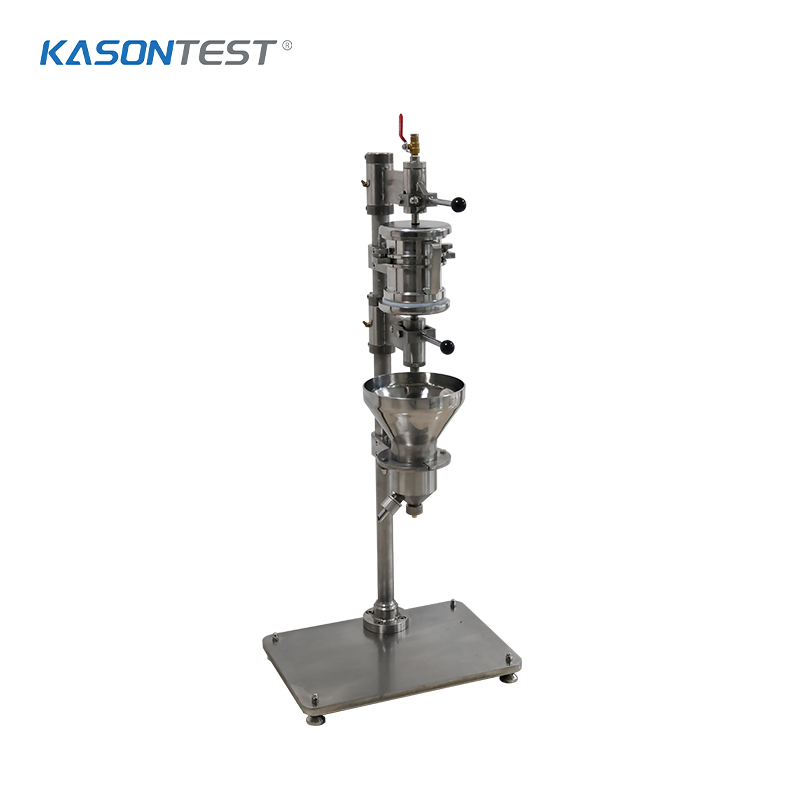
The freeness tester consists of a drainage chamber and a proportionally divided measuring funnel, mounted on a fixed support frame. The drainage chamber is made of stainless steel. The bottom of the cylinder is fitted with a perforated stainless steel screen plate and an airtight sealed bottom cover. The cover is hinged on one side of the cylinder and tightly locked on the other side; the top cover is fully sealed. Opening the bottom cover allows the pulp to discharge.
The cylinder and conical drainage funnel are separately supported by two precision-machined open bracket flanges on the frame. The entire instrument is constructed of 304 stainless steel. The screen mesh is precisely manufactured in strict accordance with TAPPI T227 standards, offering higher accuracy than many imported counterparts and featuring a long service life.
Working Principle
The instrument determines freeness by measuring the time required for pulp to pass through a standard orifice plate under fixed conditions. In operation, the pulp sample is mixed with a fixed amount of water and stirred under controlled temperature and humidity. The prepared pulp suspension is poured into the testing chamber, and the valve is opened to allow the pulp to flow through the standard screen plate. The instrument records the drainage time, and the freeness value is calculated accordingly.
Product Features
The instrument features simple operation, accurate measurement and excellent stability. It is widely used for beating inspection, process optimization, and pulp laboratory experiments in the papermaking industry.
With high testing precision and outstanding repeatability, its structural design ensures accurate and consistent test results for every measurement. Manufacturers can compare data across different batches and product lines to reliably evaluate pulp quality changes and adjust production processes in a timely manner, ensuring finished paper quality meets standard requirements.