


ASTM D638: The Definitive Guide To Plastic Tensile Testing
ASTM D638 is the most common testing standard for determining the tensile properties of reinforced and non-reinforced plastics. With the use of plastics being at an all-time high, it is critical that manufacturers be able to properly gauge the mechanical strength of their materials.
- Home >> Service industry >> By Standards >> ASTM
ASTM D638: The Definitive Guide To Plastic Tensile Testing
ASTM D638: The Definitive Guide To Plastic Tensile Testing
ASTM D638 is the most common testing standard for determining the tensile properties of reinforced and non-reinforced plastics. With the use of plastics being at an all-time high, it is critical that manufacturers be able to properly gauge the mechanical strength of their materials.
Request a QuoteProduct Details
ASTM D638: The Definitive Guide To Plastic Tensile Testing
ASTM D638 is the most common testing standard for determining the tensile properties of reinforced and non-reinforced plastics. With the use of plastics being at an all-time high, it is critical that manufacturers be able to properly gauge the mechanical strength of their materials. This guide is designed to introduce you to the basic elements of an ASTM D638 plastic tensile test, including an overview of the equipment, software, and samples needed. However, anyone planning to conduct ASTM D638 testing should not consider this guide an adequate substitute for reading the full standard.
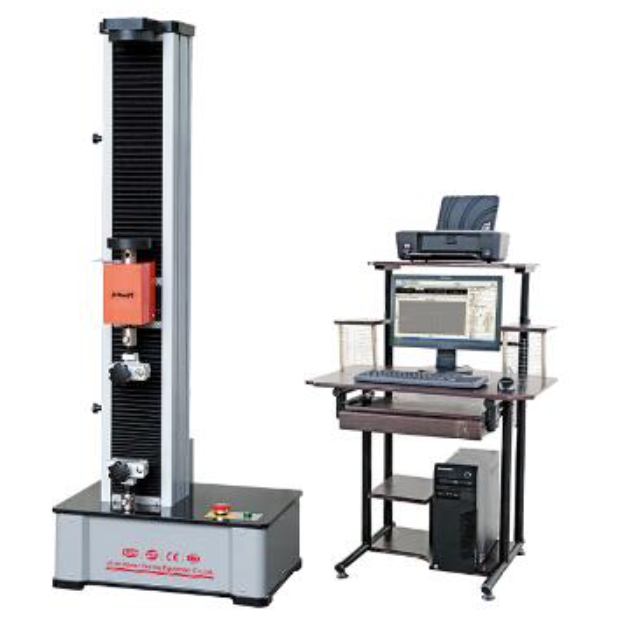
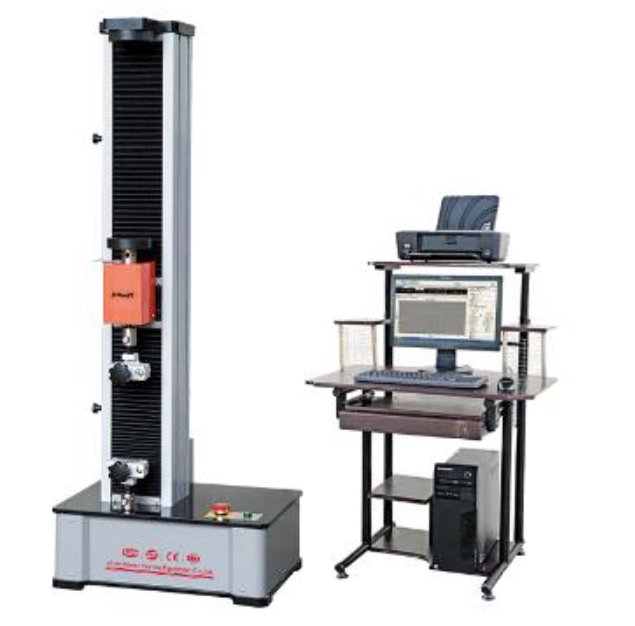
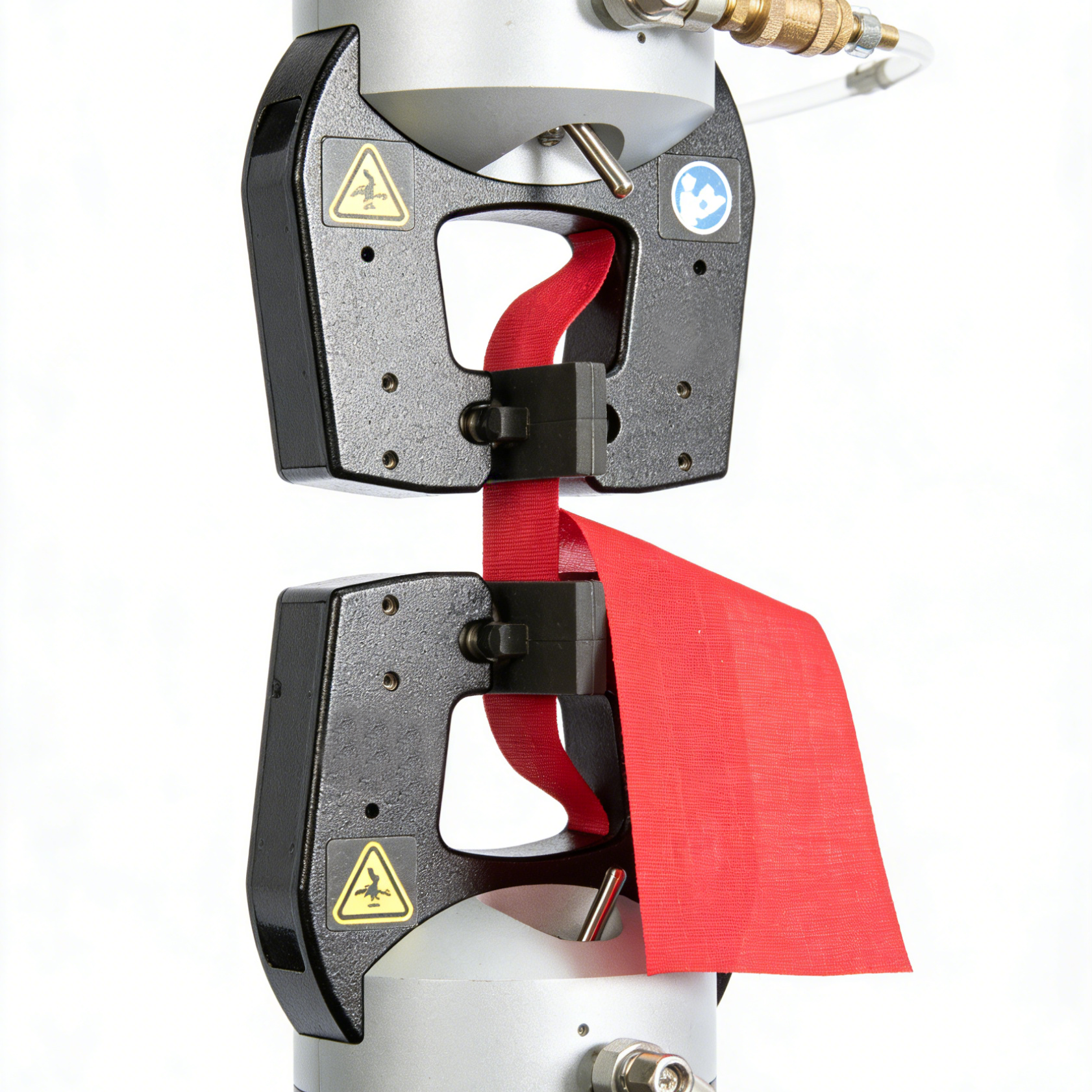
ASTM D638 is performed by applying a tensile force to a sample specimen and measuring various properties of the specimen under stress. It is conducted on a universal testing machine (also called a tensile testing machine) at tensile rates ranging from 1 to 500 mm/min until the specimen fails (yields or breaks). Though ASTM D638 measures many different tensile properties, the following are the most common:
Tensile strength – the amount of force that can be applied to a plastic before it yields (stretches irreparably) or breaks.
Tensile modulus – how much a material can deform (stretch) in response to stress before it yields. Modulus is a measurement of the material’s stiffness.
Elongation – the increase in gauge length after break divided by the original gauge length. Greater elongation indicates higher ductility.
Poisson’s Ratio - a measurement of the relationship between how far a material is stretched and how thin it gets during the stretching process.
There are many different test methods for various types of plastics. ASTM D638 only applies to rigid plastic samples between 1.00 mm and 14 mm in thickness. If your sample is a sheet or film less than 1.00 mm thick, it should be tested to ASTM D882. While it provides similar results to ISO 527-2, ASTM D638 is not considered technically equivalent due to differences in specimen size and test requirements. While some large multinational manufacturers test to both ASTM D638 and ISO 527-2, most of our customers demonstrate a preference for one standard or the other based on their geographic location. North American manufacturers usually test to ASTM D638 while those in Europe and Asia primarily test to ISO 527-2. Customers in China equally test to ASTM D638 and ISO 527-2.
There are five allowable specimen types for ASTM D638 which differ in size depending on the thickness of the specimen and the amount of material available. The most commonly used are Type I specimens, which are 3.2 mm thick and are generally created by injection molding. Type I specimens have an overall length of 165 mm and width of 13 mm, with a gauge length of 50 mm. Flat specimens are typically molded, die-cut, or machined into a “dogbone” or “dumbbell” shape, which ensures that the break occurs in the center of the specimen rather than at the clamping areas. In addition to flat specimens, ASTM D638 also allows for the testing of rigid tubes and rods, both of which must also be machined into a dogbone shape. In instances where material is limited, many labs will use Type IV or Type V specimens. The dimensions required for Type IV specimens are the same as those required for ASTM D412 die cut C, meaning that the same die cut can be used. Type V specimens are the smallest, with a gauge length of only 0.3 in.
All specimens must be measured before testing in accordance with ASTM D5947. Most typical micrometers should be suitable for performing these measurements. For the test system to display Stress measurements rather than just Force measurements, operators will be asked to input the cross-sectional area (or thickness and width) of the specimen, because Stress = Force / Cross-Sectional Area (this is shown in units of Psi, Pa, kPa, GPa, etc).
Die-cut or machined samples need to be measured individually, but operators using injection molded specimens only need to measure a single sample from a sample lot providing the variation in that sample lot is proven to be less than 1%. Injection molded specimens are often produced with a draft angle instead of being perfectly square, which must be taken into consideration when measuring the specimen. Always make sure that width measurements are taken at the center of the draft angle.
The Automatic Specimen Measuring Device feature in Bluehill Universal allows operators to connect up to two micrometers or measurement devices to the computer and input the data directly into the software. This eliminates the chances of input errors and increases efficiency.
Product parameters
Download
| Name | Download |
|---|
Applicable industries
Related Products

-
Telephone:+86 15910081986
Address:NO.4715, JINGSHI WEST ROAD, HUAIYIN DISTRICT, JINAN, SHANDONG, CHINA
Mailbox:admin@jnkason.com
-
Testing machine equipment metallographic analysis hardness tester series
Non-destructive testing equipment Material analysis instruments
©2026 Jinan Kason Testing Equipment Co., Ltd.