


ASTM D575-91: Standard Test Methods for Rubber Properties in Compression
ASTM D575 is a testing standard used to determine the stiffness of rubber materials in compression. ASTM D575 allows rubber suppliers to characterize the stiffness of the material they produce to help downstream manufacturers source the correct material for their components.
- Home >> Service industry >> By Standards >> ASTM
ASTM D575-91: Standard Test Methods for Rubber Properties in Compression
ASTM D575-91: Standard Test Methods for Rubber Properties in Compression
ASTM D575 is a testing standard used to determine the stiffness of rubber materials in compression. ASTM D575 allows rubber suppliers to characterize the stiffness of the material they produce to help downstream manufacturers source the correct material for their components.
Request a QuoteProduct Details
ASTM D575-91: Standard Test Methods for Rubber Properties in Compression
ASTM D575 is a testing standard used to determine the stiffness of rubber materials in compression. ASTM D575 allows rubber suppliers to characterize the stiffness of the material they produce to help downstream manufacturers source the correct material for their components. Data collected from ASTM D575 testing is important for applications that require elastomeric materials subjected to compressive stresses. One wide-ranging application is the sealant industry, as due to its ease of extrusion and flexible nature, rubber is commonly used material for sealants.
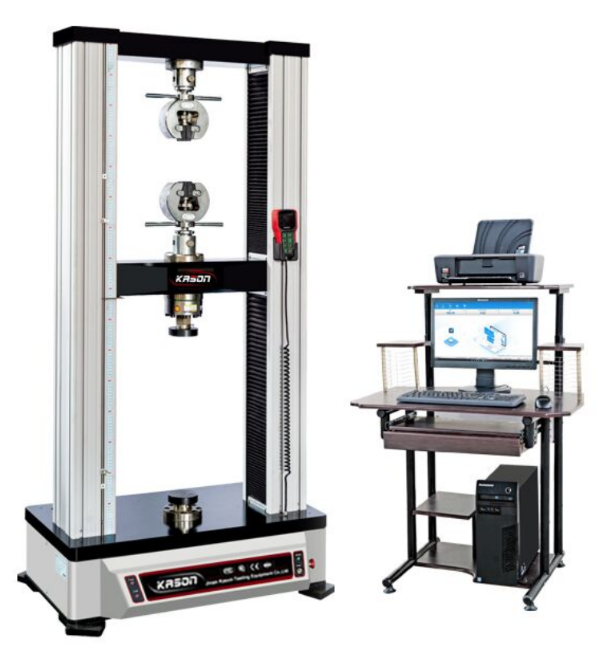
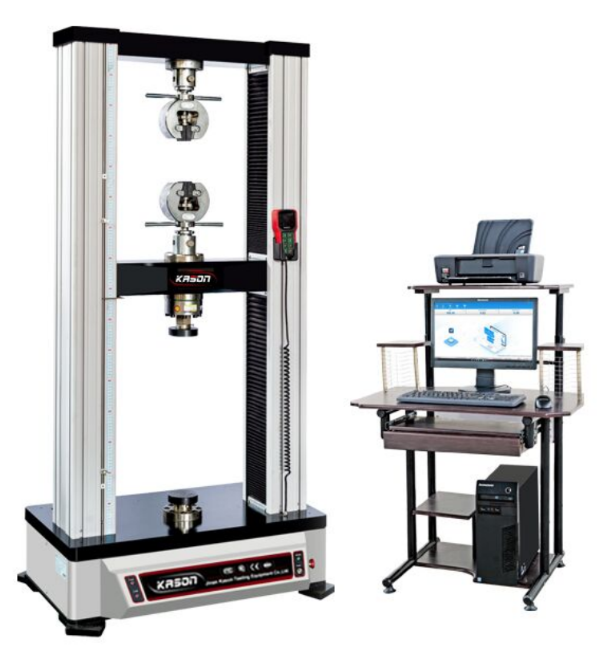
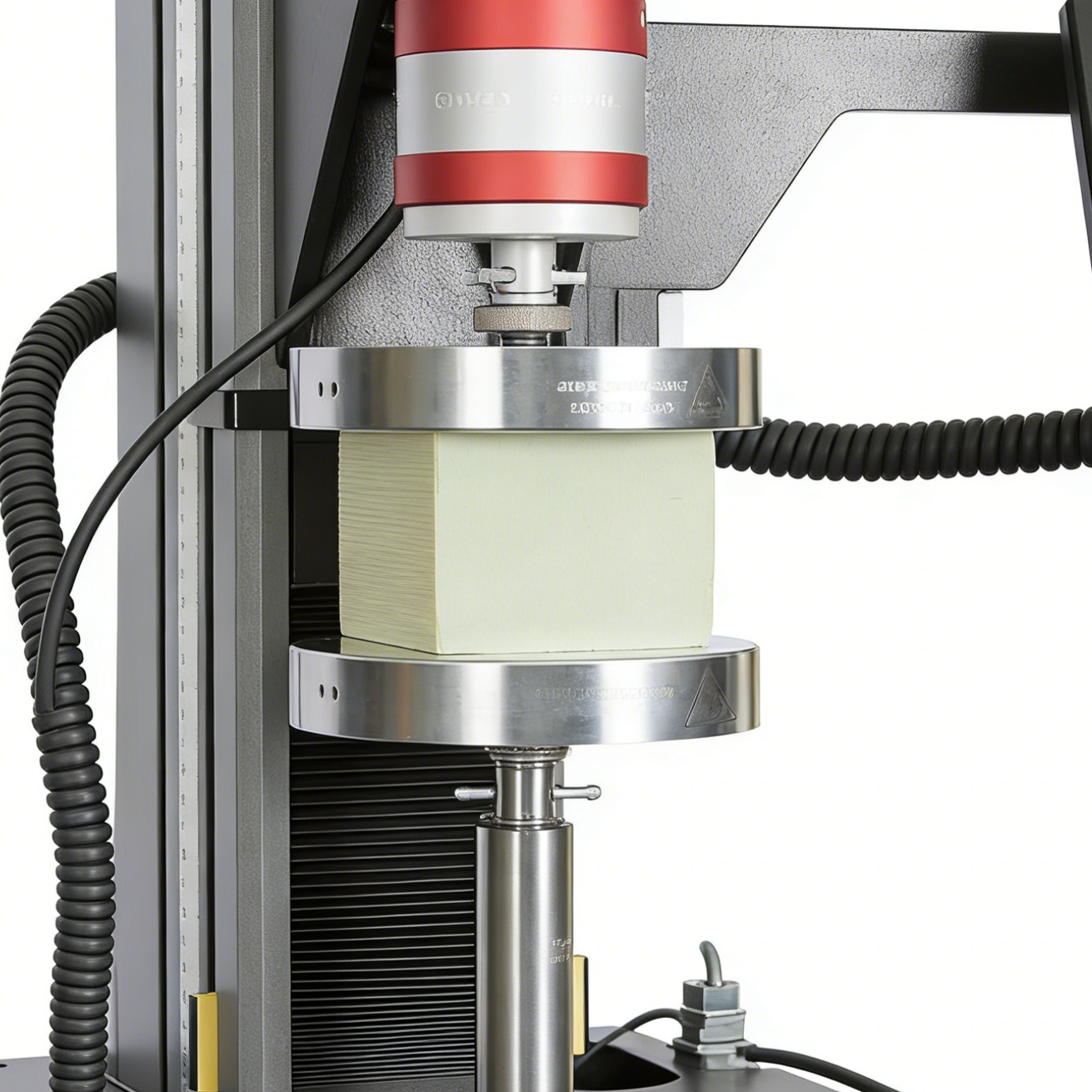
Method A applies a predetermined deflection to the cylindrical specimen at which the force is recorded. Alternatively, Method B applies predetermined minor and major forces to the specimen and deflection is measured.Depending on maximum expected forces, ASTM D575 is performed on a single column or dual column universal testing system. This system setup requires a matching load cell and upper and lower platens with diameters larger than the diameter of the specimen. Platens should have rigid connections to the frame and load cell, and must be rated to a load capacity which exceeds forces generated during the test.
ASTM D575 OPTIONAL ACCESSORIES
Though not required by the standard, parallelism can be ensured by including an integral spherical seat on the upper platen. Though crosshead displacement measurements are adequate for ASTM D575, those interested in the most accurate deflection measurement should consider using a linear variable displacement transducer.
For the most accurate deflection measurements, we recommend a 2601 series LVDT attached to the platen itself over the use of crosshead displacement measurement. If crosshead position is used, it is important to use Corrected Displacement in Bluehill Universal to prevent error from machine compliance.
Is parallelism of platens important to your lab? If so, compression platens with integral spherical seats are ideal for ensuring platen to platen parallelism.
If performing ASTM D575 Method B, be aware that a force hold is a requirement of the test. Similar to longer creep or stress-relaxation tests, holding force requires the load cell’s transducer settings to be tuned to the effective stiffness of test setup, which includes the specimen itself and any fixturing.
Product parameters
Download
| Name | Download |
|---|
Applicable industries
Related Products

-
Telephone:+86 15910081986
Address:NO.4715, JINGSHI WEST ROAD, HUAIYIN DISTRICT, JINAN, SHANDONG, CHINA
Mailbox:admin@jnkason.com
-
Testing machine equipment metallographic analysis hardness tester series
Non-destructive testing equipment Material analysis instruments
©2026 Jinan Kason Testing Equipment Co., Ltd.